
Every deposit, explained down to the registration.
The TPS Report takes one bank deposit and shows you exactly which registrations made it up, what Stripe took, and what landed. Behind it sit budget against actual, pace, sponsorship yield, and the rest of what a board actually asks for.
Join Early Access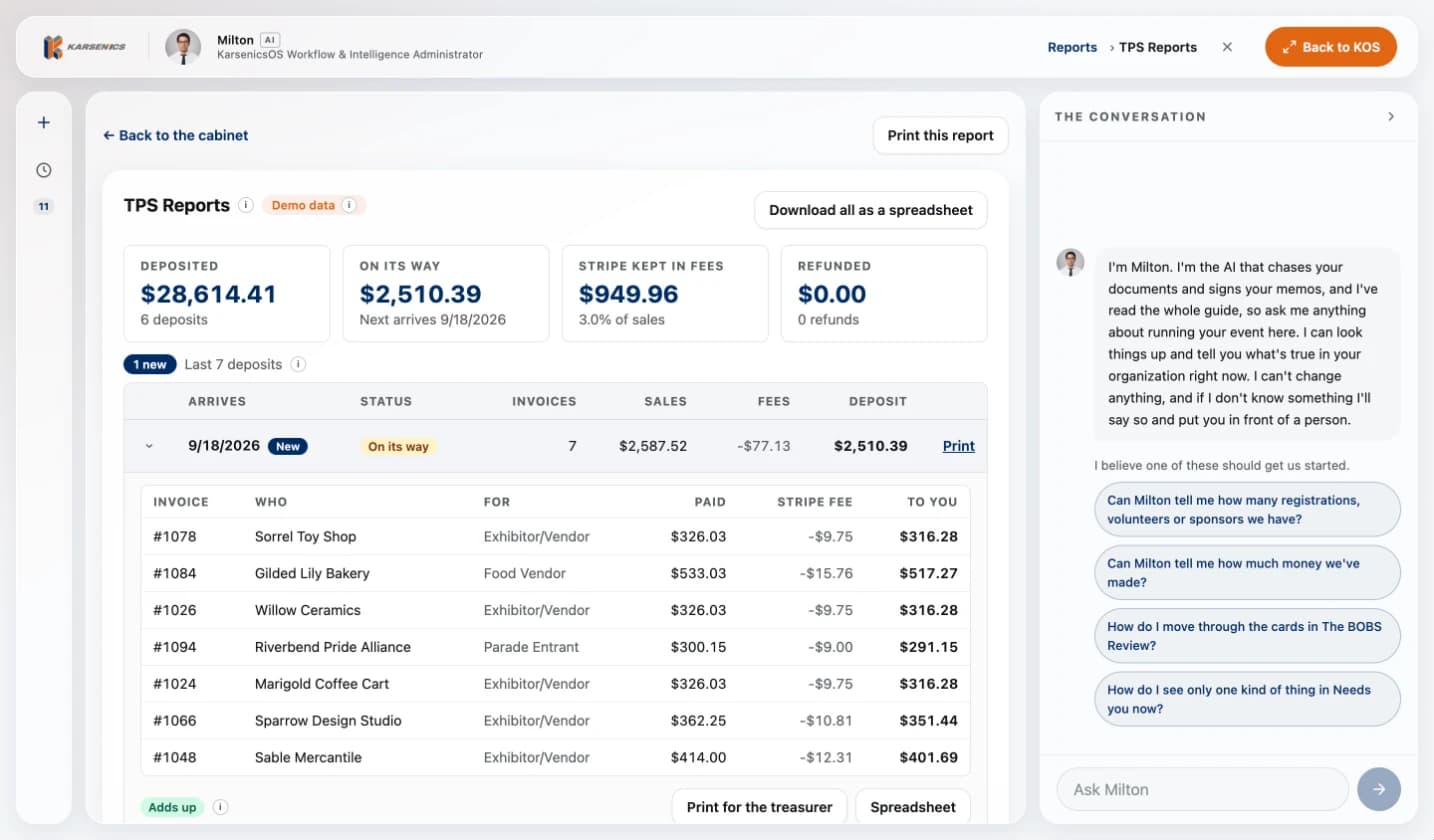
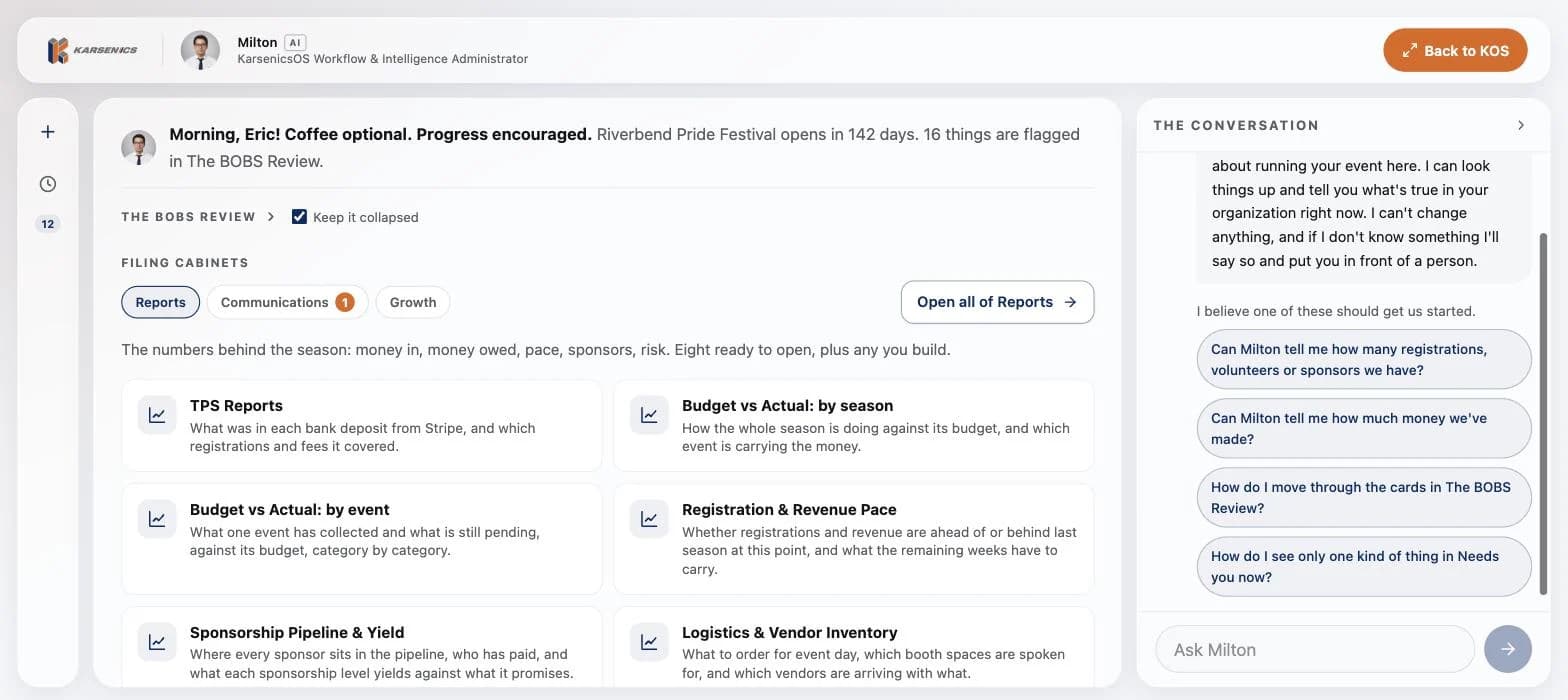
Eight reports, each answering a question somebody asked.
A short film of the report shelf in the real product, with demonstration data. No sound needed.
Reconciling a deposit against a payment dashboard is somebody's whole Tuesday.
A number lands in the bank account. It does not match any single invoice, because it is a batch, minus processing fees, settled on the processor's schedule. Somebody exports a CSV, opens the bank statement, and works backwards. Karsenics does that mapping when the deposit happens and sends you the answer.
- A bank deposit that matches nothing in your books
- Processing fees discovered at reconciliation, never at checkout
- Board questions that need a week of spreadsheet work to answer
- Budget goals living in a document nobody opens after February
Eight standing reports, and one you build.
TPS Report
Transaction Payout Settlement. One report per deposit, mapping gross registration fees, processing fees, and the net that landed, line by line.
Budget vs actual, by event
Collected, pending, and budget for one event, down to each registration category and add-on row.
Budget vs actual, by season
The whole season against its budget, and which event is carrying it.
Registration and revenue pace
Whether you are ahead or behind, and what the remaining weeks have to carry to land on budget.
Sponsorship pipeline and yield
Where each sponsorship sits and what each level returns against what it promises.
Logistics and vendor inventory
What to order, what is spoken for, and who is arriving on event day.
Risk and incident log
What could still go wrong, ranked, and what already did.
Multi-year and ROI impact
Season over season, retention, and volunteer hours priced as contributed value at the rate you set.
Build your own
Pick what to count and which columns to show. Saved reports stay here to rerun any season.
One deposit, every registration inside it.
Gross registration fees, minus the processing fees, equals the number in your bank account, with every invoice in the batch listed underneath. Anything that settled through the same account outside Karsenics still appears, with the processor's own description, so the deposit always adds up rather than nearly adding up.
- Deposit header states the arithmetic: gross, fees, net
- One row per invoice with the organization and what they registered for
- Unmatched transactions shown, never quietly dropped
- Download one deposit as CSV, or every recent deposit at once
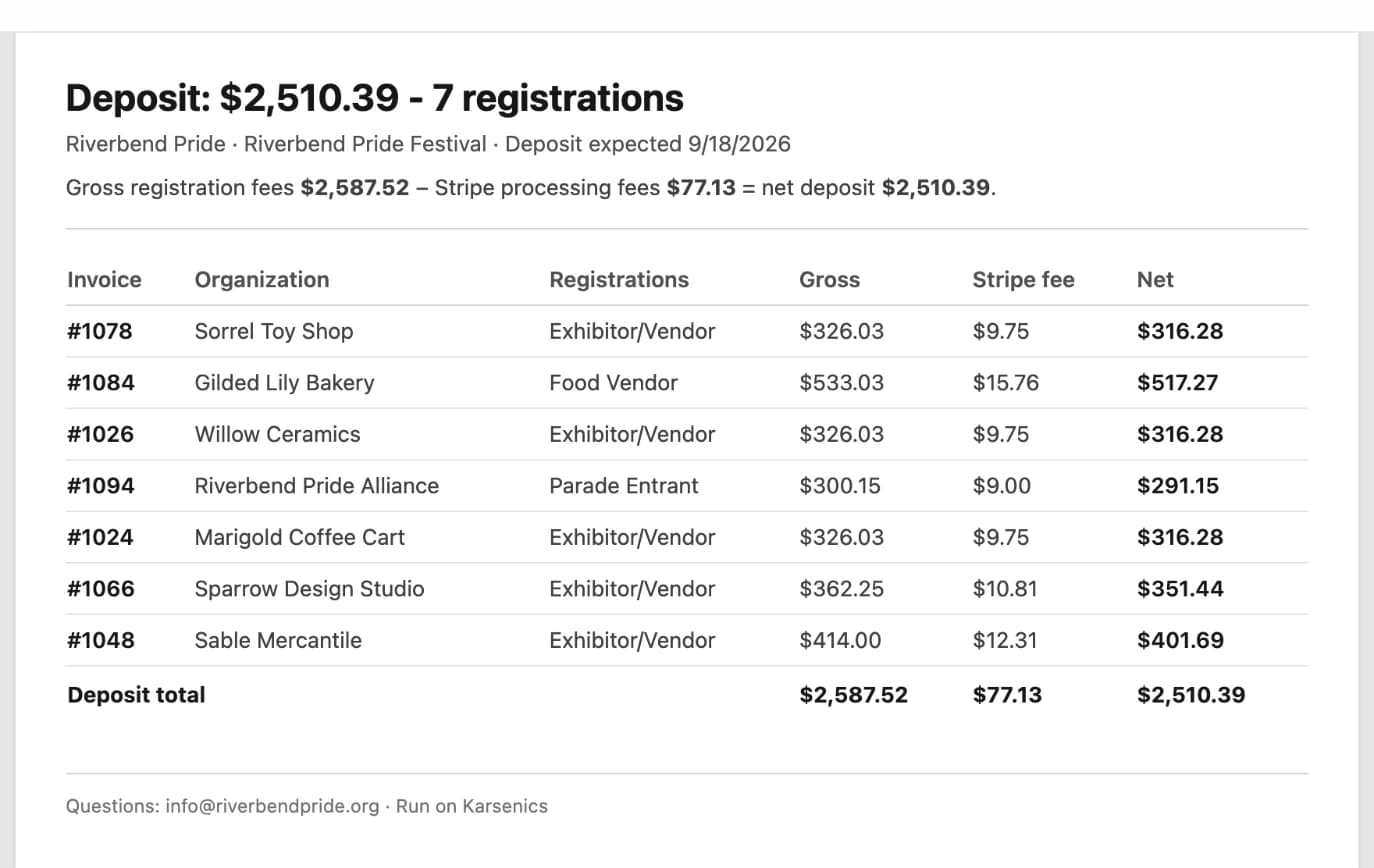
The report arrives before anyone asks for it.
When the processor pays out, Milton emails that deposit's settlement to your organization contact and anyone else you name, with the full breakdown in the message so a treasurer can reconcile from the inbox. Exactly once per deposit. The module keeps its own count of what is new since you last looked.
- One email per deposit, to the contacts you choose
- New deposits badged in the module until you have seen them
- Deposits that predate your account are baselined silently, with no email backlog
- Each deposit notes when its report was sent
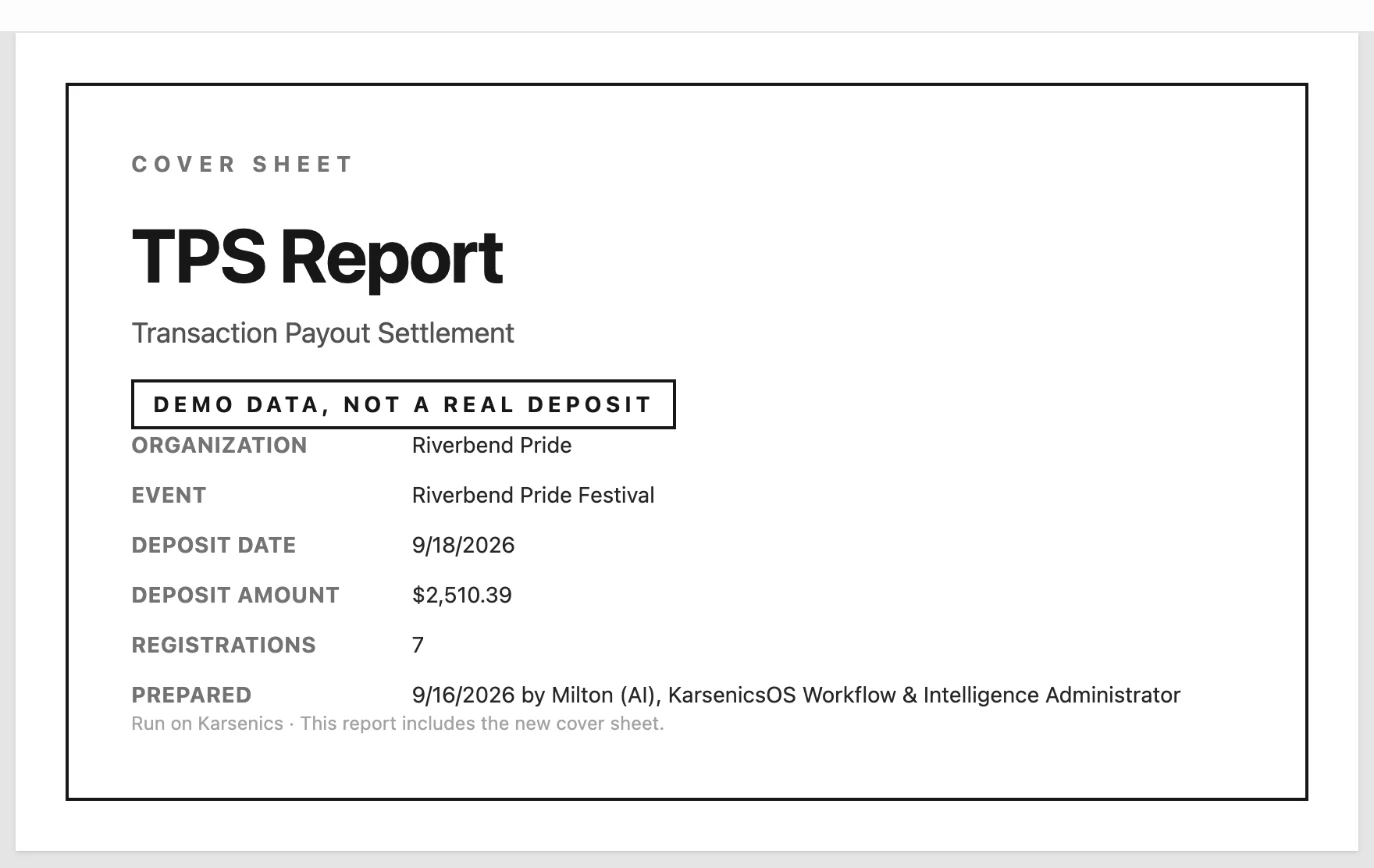
A document you can put in front of a board.
Every deposit prints as its own report, opening with a cover sheet naming the organization, the event, the deposit date and amount, and who prepared it. Behind the cover sheet, the settlement table. It prints on paper or saves as a PDF, and it is the same document whether it goes to your treasurer, your board, or your auditor.
- Cover sheet, then the line-by-line settlement
- Prints from the browser, no export step
- Every report in the module also downloads as a spreadsheet
- Registration types export as Word, PDF, or Markdown for sharing
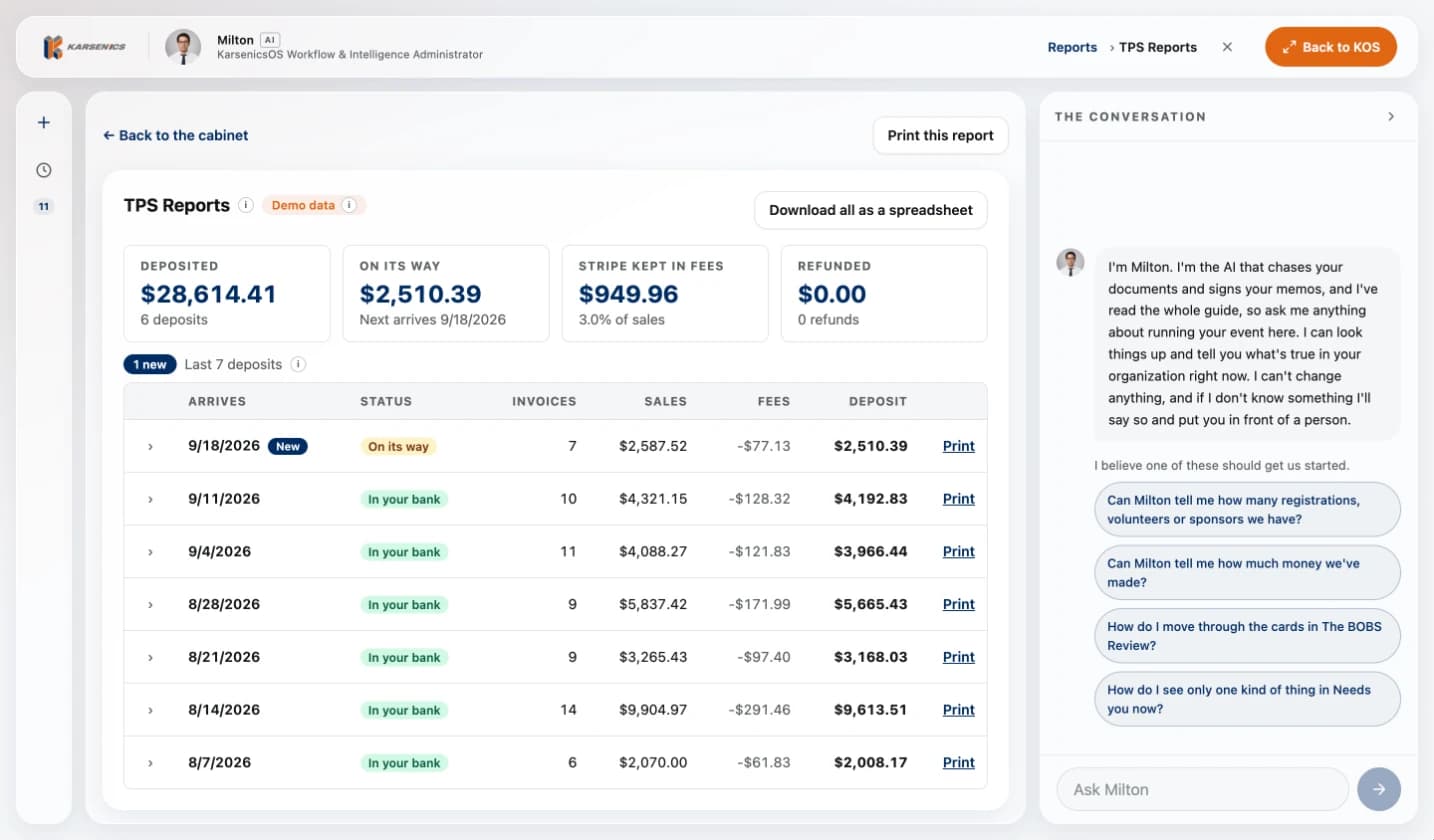
Reports, not a dashboard you have to interpret.
Each report answers one question a real person asked: are we on pace, which event is carrying the season, what do we still need to order, who might still cause a problem on the day, and how does this year compare to the last three. If none of them fit, build your own from the fields you care about and it stays here to rerun next season.
- Every report opens on screen, prints, and downloads as a spreadsheet
- Build your own: pick what to count and which columns to show
- Saved custom reports rerun against any season
- The chase list of who still owes something lives with the readiness work, not here
What does your board ask for that you dread?
Tell us what your treasurer reconciles by hand and we will show you what it looks like here.